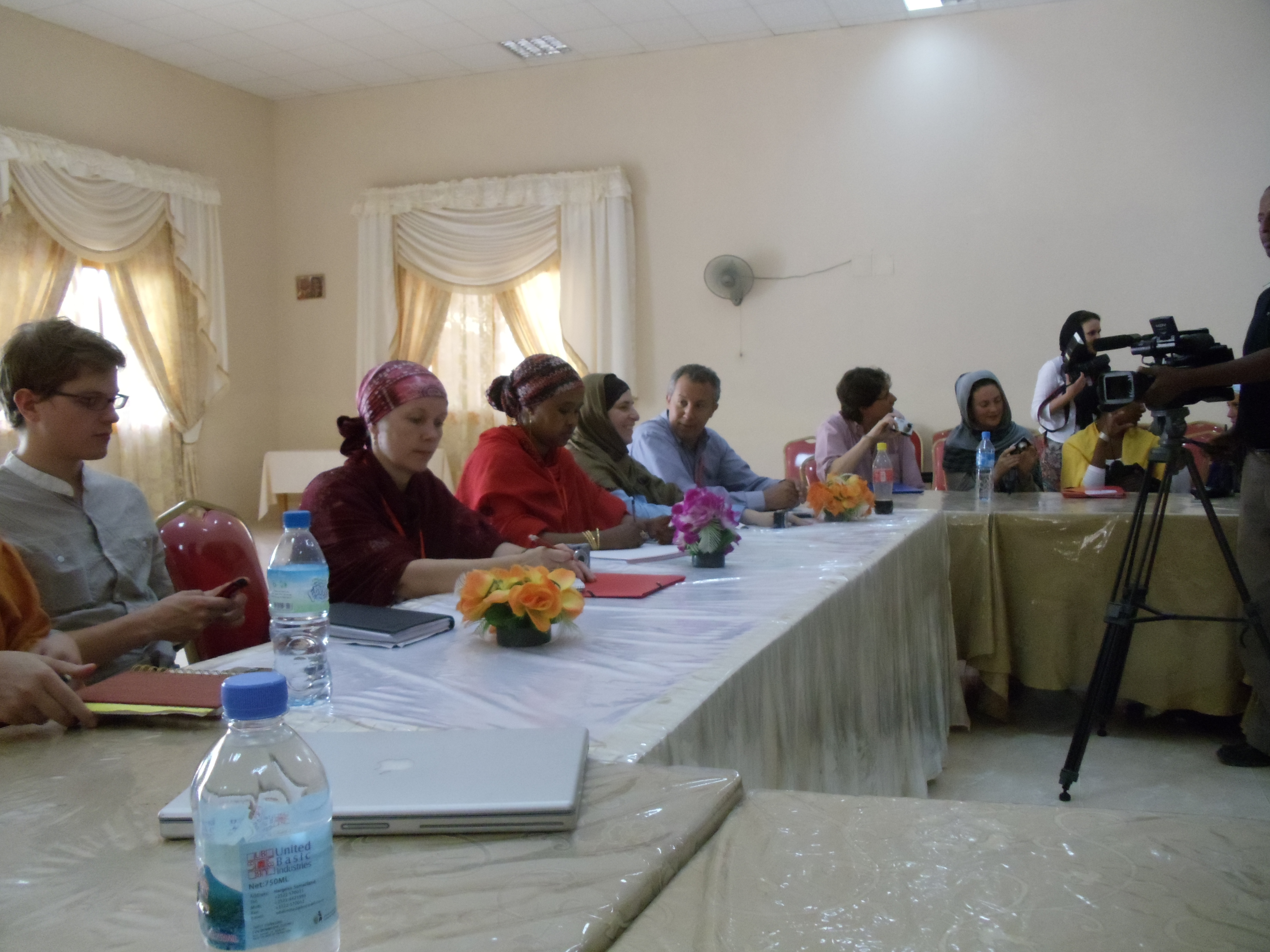
Volunteers at an Edwin Washington Event.
The Edwin Washington Society is a non-profit 501(c)(3), thus must keep our costs as low as possible. Please volunteer.
The strategic policy goals for projects are proposed by the Society President and then agreed on by the Board of Directors. Volunteers for the entire society are hired and supervised by the President/CEO, who is also the overall manager for the society. However, daily management of volunteers in the Edwin Washington Project is led by the project Director, Dr. Anthony Arciero. Daily management for the Bulletin of Loudoun County History, the Rust Project, External Research, the GIS project and the Mortimer Virts project are handled by the President/CEO.
We especially need volunteers in the following areas:
- Archaeologists .
- Black History experts.
- Cataloging
- Editors
- Historians
- Media interaction
- Preservation
- Scanning
- Web management and the Internet in general
- Writers
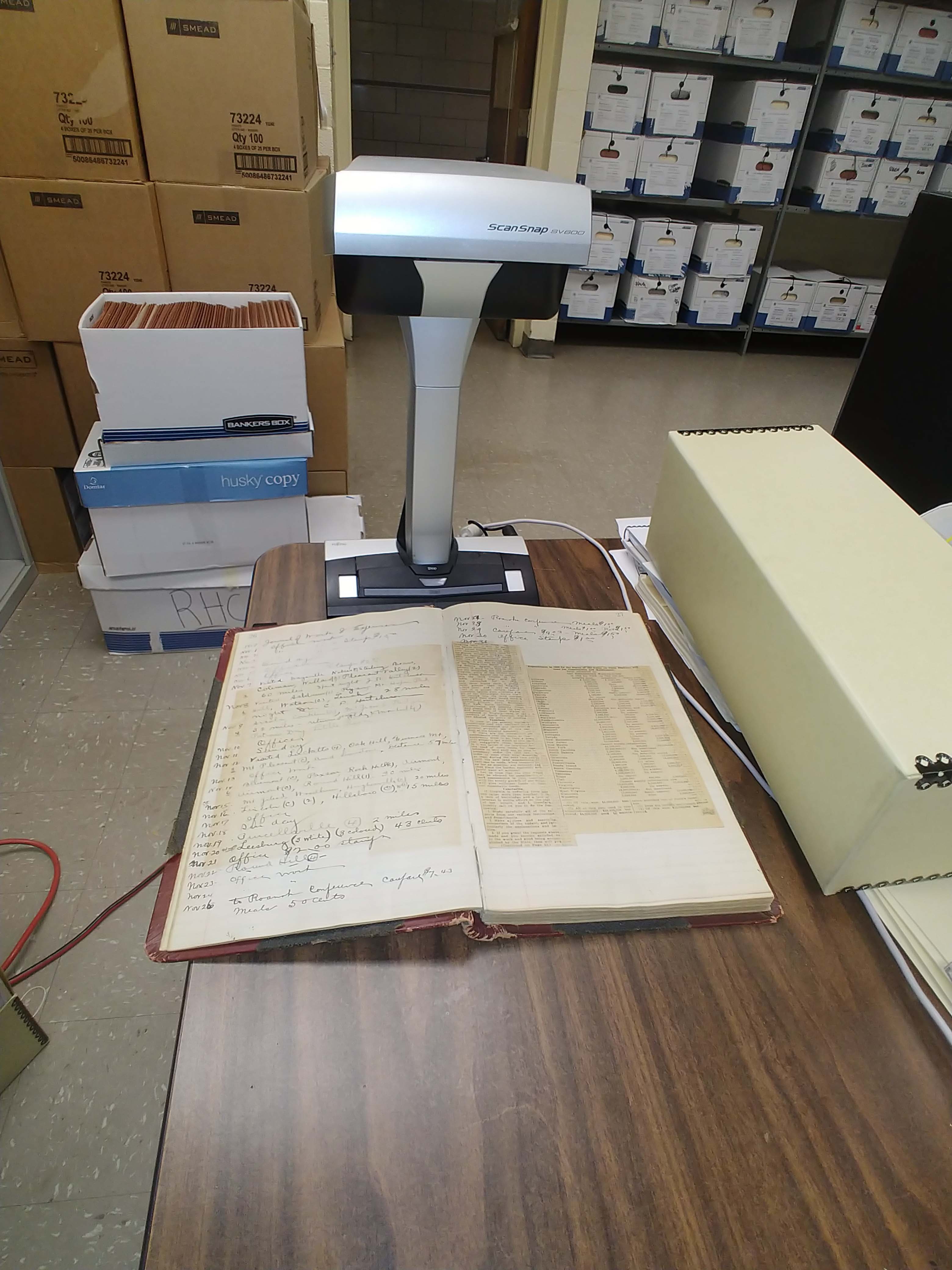
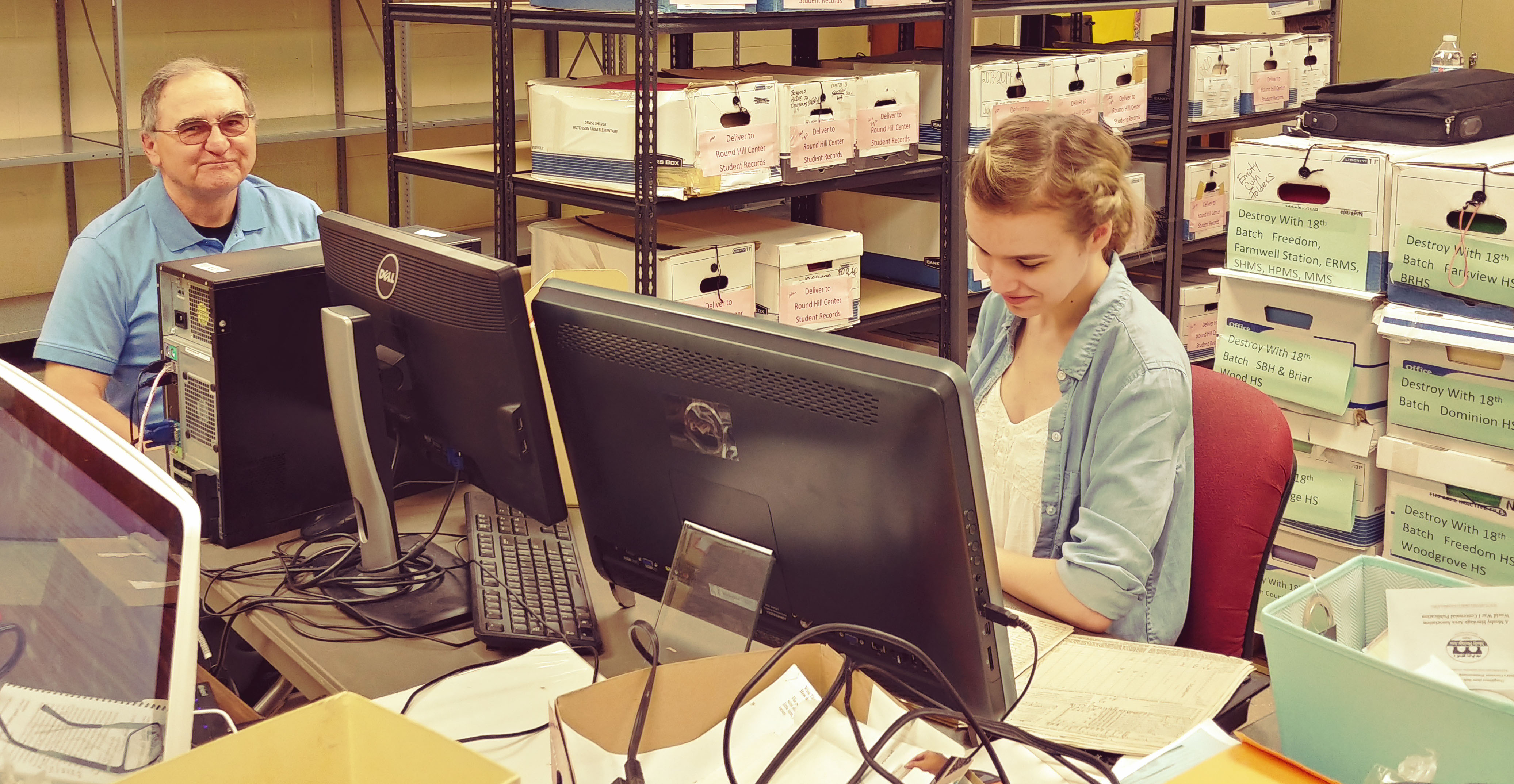
The Edwin Washington Society is a 501©(3) corporation with a Board of Directors, Corporate officers, and volunteers. Some Board members and officers are also volunteers. .
The principal projects and services managed by the Society are:
- The Edwin Washington Project
- The Bulletin on Loudoun County History
- External Research
- GIS Service
- The John Rust Project
- The Mortimer Virts Mortuary Records Project
CURRENT ACTIVE VOLUNTEERS and OFFICERS
- Larry W. Roeder, Jr. MS Chief Executive Officer for Edwin Washington Society (EWS) Supervises all officers and volunteers. Chair of the Board of Directors. Editor in Chief of the Bulletin of Loudoun County History. Conducts research on segregated schools outside of Loudoun to discern similarities and differences. Builds partnerships with external Black history committees. Represent the Society to the Country School Association of America (CSAA) and the Douglass Commemorative Committee, Loudoun County.
- Anthony Arciero: PhD (Education), George Mason University. Former member of the Board of Directors. Director of Edwin Washington Project EWP as of 2022.
- Gertrude Evans: Docent of the EWS as of 2022. Former member of the Board of Directors. Conducts transcription projects aimed at identifying who studied and taught at “colored” schools.
- Nathan Bailey: EWS Secretary as 2022. Volunteer Historian. Developing videos and analysis of the segregated transportation system and how it handled white and Black students. Mr. Bailey is also coordinating the activities of the volunteers.
- Christopher Brown: Attorney and civil right advocate. Member of the Board of Directors as of 2022. Grandson of Edwin Cicero Brown, Sr who represented the Black Community in Leesburg which sought working toilets for the Training Center.
- Gladys Burke: Owner of ADJ Enterprises. Manufacturer of promotional material and creator of the conference bag for “Dirt Don’t Burn.” Developing a rewrite of a Depression era play performed on Broadway and at the Ashburn Colored School.
- Robert B. Carter: Grandson of Superintendent Oscar Emerick. Provides family background.
- Patricia Dean: Explains the experience of former students at Conklin village as well as the impact of Evangelist Jennie Dean, who founded the Prosperity Baptist Church. Patricia is a direct descendant of Jennie Dean and has a wealth of knowledge about the village in general. Our research began at Conklin.
- Marc Dluger, Professor of History at Northern Virginia Community College has collaborated with the Bulletin on soliciting articles from the student body.
- Nancy Emerick: Granddaughter in law of Oscar Emerick, Superintendent from 1917 to 1957. Provides family context, including access to private records.
- Charles Evans, Professor of History at Northern Virginia Community College has collaborated with the Bulletin on soliciting articles from the student body.
- GIS Volunteers: Being coordinated with LCPS. Under development as of 2022.
- Julie Goforth: Chief Technology Officer for EWS, as of 2022. Member of the Board of Directors. Manages our web presence and digital preservation efforts. Julie has worked with the Smithsonian Institution Archives, the Waterford Foundation, and Oatlands Historic House & Gardens.
- Maddy Gold: Chief Cartographer, formerly with the B.L.M., Bureau of Land Management. Developed our first on-line map showing former segregated schools and transportation routes. After leaving, has continued on occasion to help us develop a paper map (first draft). FYI: As of Feb 2022, the GIS service is now being co-developed with LCPS (Loudoun County Public Schools).
- Barry Harrelson, MS: Former Editor of the Edwin Washington Society. Conducted quality control analysis of reports and is Development Editor for the Dirt Don’t Burn Book. Copy Editor for the Bulletin of Loudoun County History.
- Randy Ihara: Civil rights advocate. Retired member of the Board of Directors. Was treasurer, in 2022.
- Lori Kimball: Former member of the Editorial Committee, Bulletin of Loudoun County History. Invaluable researcher on the formerly enslaved of the Oatlands Plantation and their descendants, as well as the Mountain Gap Colored School and the impact of Spanish Flu on Blacks.
- Pastor Carlos Lawson: Member of the Board of Directors. Lead expert on Conklin and the Prosperity Baptist Church. Coordinated a team of church volunteers who were critical to the success of Dirt Don’t Burn, 2018. Also, Chaplain of the Edwin Washington Project.
- David Prebich: Lead researcher processing petitions written in the 19th and early 20th century by white and Black citizens.
- Prosperity Baptist Church Volunteers: Virginia Pierce, Amanda West, Freddie West, Joy West, Joe Jackson. Coordinated by Pastor Carlos Lawson.
- Jim Roberts: Former student at the Leesburg Training Center. Has been invaluable recounting life at the school as well as the location of objects, long gone. Has been identifying former teachers and students in photographs found at Virginia State University.
- Hari Sharma: Former Chief Financial Officer of the Edwin Washington Society. Former Treasurer and member of the Board of Directors.
- Jana Shafagoj, Former member of the Editorial Committee, Bulletin of Loudoun County History.
- Sherri Simmons: Member of the EWS Advisory Committee. Former Assistant Principal, Douglass School, and member of the planning committee for the November 10, 2018 Conference “Dirt Don’t Burn.” Former member of the Board of Directors. Invaluable link to the larger Black community of Loudoun and neighboring counties.
- Neil Steinberg: Vice President of the Edwin Washington Society and Treasurer as of 2024. Owner of Photoworks in Leesburg and member of the Leesburg Town Council. Chief of photography. Digitally copying and reproducing without imperfections, important images from our collection. Also does still photos for “Dirt Don’t Burn.”
ALUMNI
- Kelly Arford-Horne: Former Chief Archeologist. Developed a plan to excavate Bluemont Colored School. This needs to be approved by Loudoun County Schools and will be dependent on the COVID-19 virus. Kelly has an MA in Archaeology and Heritage, and over 20 years of experience in the field of archaeology. For the past 3-4 years she has been the assistant director of archaeology for the Josiah Henson House in Bethesda, now under construction as a museum.
- Belinda Blue, MS: Developed analysis on how the public school system in the 1930’s provided assistance to the poor.
- Donna Bohanon: Chair of the Black History Committee of the Friends of the Balch Library. Invaluable link to the larger Black community of Loudoun and neighboring counties. Former volunteer Editor for the Bulletin of Loudoun County History.
- Emily Branch: Did statistical analysis on students and buildings from registers and term reports during the segregated era.
- Katie Bushman: Former student at Princeton University. Coordinated statistical study on Conklin and other schools in 2018. Has agreed to do more statistical research.
- Myron Curtis: LCPS Instructor, Broad Run High School. Advised on student volunteers doing research
- Sarah Dillistin: Worked on catalog and analysis of the John Rust papers in 2019, a box of documents covering the history of Loudoun from about 1832 to about 1930, found in a trunk in a cellar in Lovettsville. Sarah was a part-time librarian at the Middleburg Public Library, Middleburg, Va.
- Pat Duncan: Researched historical records, including US census, military, vital statistics, and newspapers to develop biographical information on hundreds of Black citizens who signed petitions in Loudoun County.
- Kerri Gonzalez: Former Archivist at Foxcroft School. Helped us understand support of Black children by the Foxcroft school during segregation, in particular for Victory Gardens during World War Two and the provision of health services. Also helped us understand many old newspaper archives.
- German exchange students provided through the George Marshall Center, Leesburg, Virginia. Laura Di Biasi, Hannah Heidelmeyer, Raoul Oprisch and Niklas Ritter. Effort coordinated by Dr. Laurie West Van Hook, Vice President, History Programs and Museum Operations, George C. Marshall International Center, also Millie Schwenk, SPEP Director.
- Stephen Hammond, former member of the Editorial Committee, Bulletin of Loudoun County History.
- Jess Oxley Hood, Union Organizer. First web designer.
- Mallika Lakshmminarayan: Did statistical analysis from registers and term reports of segregated schools.
- Loudoun County School for the Gifted students who helped in 2016. 12th grade Leah Smith and Peyton Moriarty; Kamran Fareedi; 10th grade Liam Moriarty; 9th grade Shailee Sran, Sofi Conway, and Katie Knipmeyer.
- Delores Grigsby: Processed petitions written in the 19th and early 20th century by Blacks.
- Kent Hardcastle: Researched management techniques by Oscar Emerick.
- Allen W. Jones: Professor, retired, Auburn University. Provided advice on the education in agricultural topics for Blacks during segregation. Professor Jones has been researching this topic since the 1960’s.
- Sharon Knipmeyer: Loudoun School for the Gifted. Partnered on the Ashburn Colored School and the treatment of gifted children. Helped with publicity material. (see also list of Gifted School students who helped the project).
- Ryan MacMichael: Researched historical records, including US census, military, vital statistics, and newspapers to develop biographical information on Black citizens who signed petitions
- Doug Miller: Vice President, AOL, and former Member of the Board of Directors. Former Secretary of the Society.
- Mary Randolph: Member of the Douglass Alumni Association and member of the planning committee for the November 10, 2018 Conference “Dirt Don’t Burn.”
- Kathy Reid: Managed research projects on libraries and key research on religious orientation of public-school instructors.
- Edward Spannaus: Instrumental in understanding the history of the Lovettsville region of Loudoun County. Located for our use numerous 19th century registers. Former volunteer Editor for the Bulletin of Loudoun County History and is a volunteer with the Lovettsville Historical Society. Has researched Lovettsville-area schools, and Storer College graduates who taught in Loudoun.
- Rick Svensson: Former copy Editor for the Bulletin of Loudoun County History.
- Dorothy Washington: Member of the Black History Committee of the Friends of the Balch Library. Conducted transcription projects aimed at identifying who studied and taught at “colored” schools.
Information on this page is copyrighted by the Edwin Washington Society, which at the request of Loudoun County Public Schools, is dedicated to revealing what happened to Blacks in the segregated schools of Loudoun. Superintendents said that such research is essential. It is the first such major study. The project is also a member of the Country School Association of America, a network of academics which studies rural education in the United States.
 DFV The Edwin Washington Society